
For native apps
Your users can't tell you what happened. The minidump can.
BugSplat collects it, matches it to the symbols for that build, and hands you the faulting line. It works with C++, .NET, Qt, and Electron, on Windows, macOS, Linux, and mobile.
Helping great teams splat their bugs

















What you get
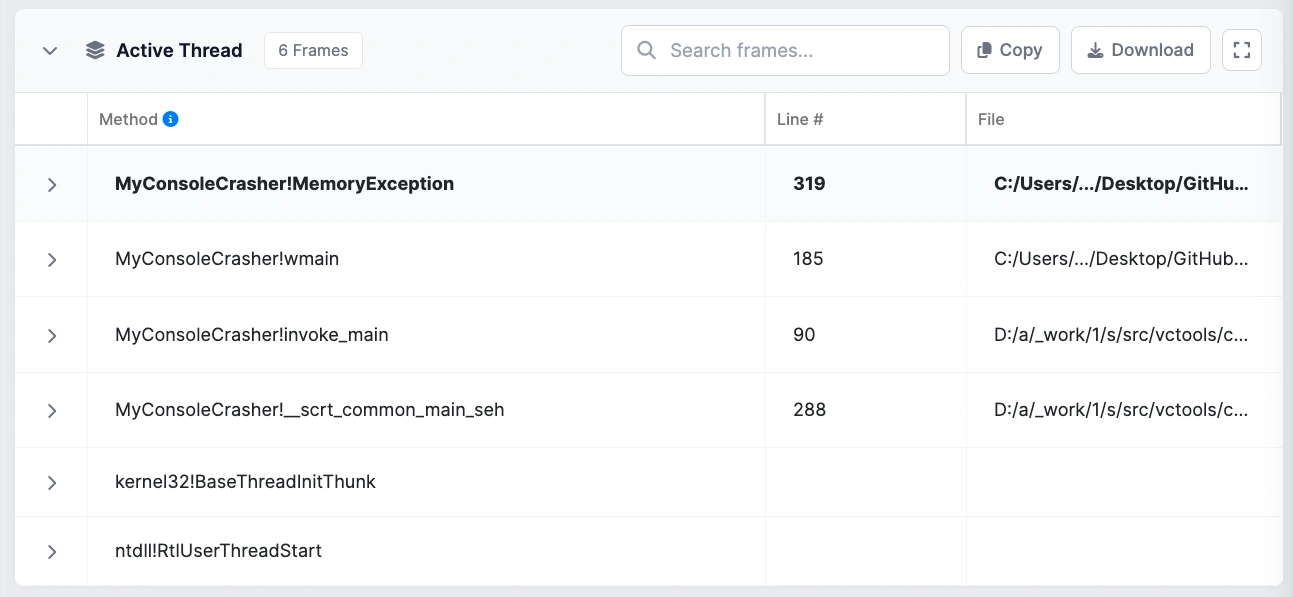
The call stack from the build that shipped, down to the line of code that faulted.
Here is what BugSplat does when a customer's crash lands on your desk.
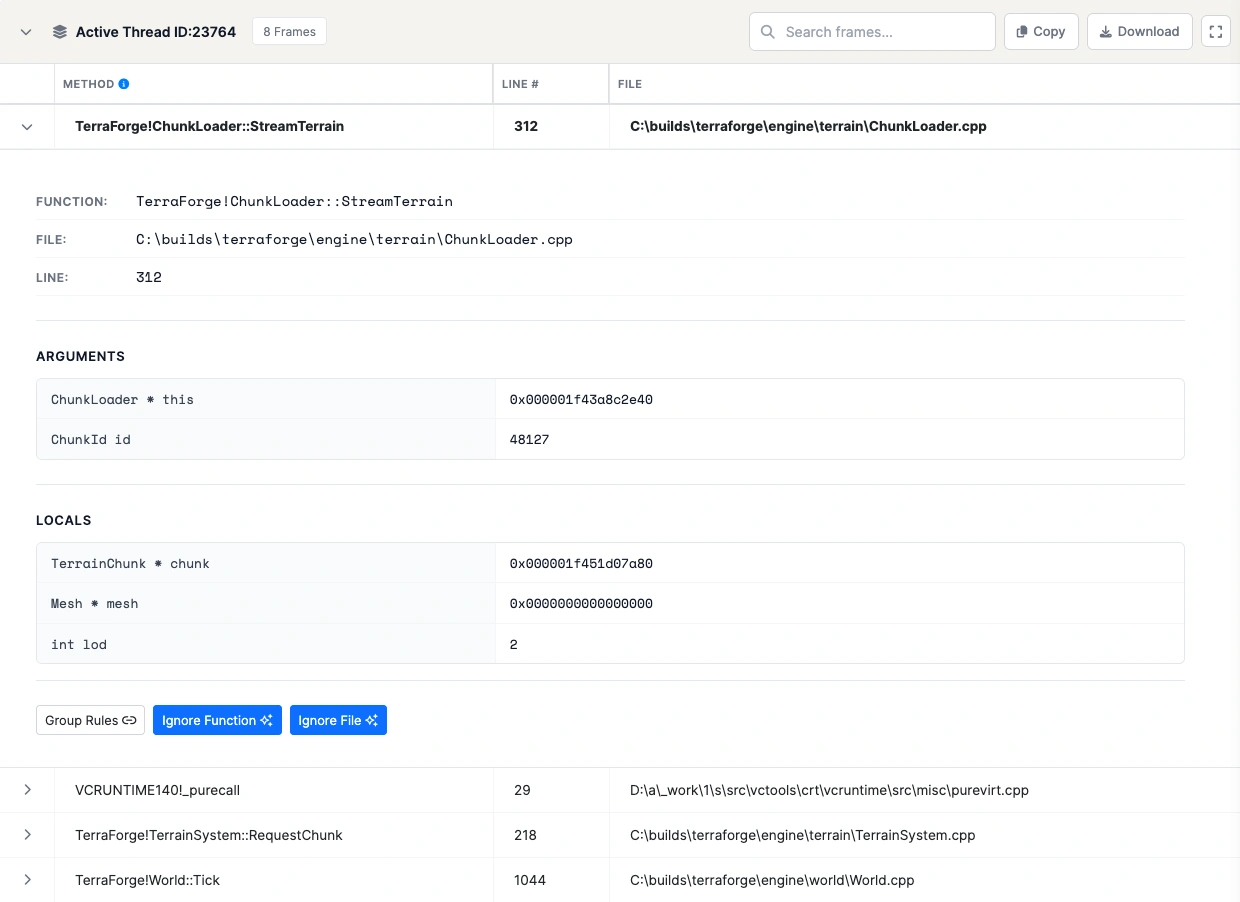
Crashes resolve against the symbols for the exact build that shipped: PDBs, dSYMs, uploads, or your own symbol server. On supported platforms, you get the arguments and locals too.
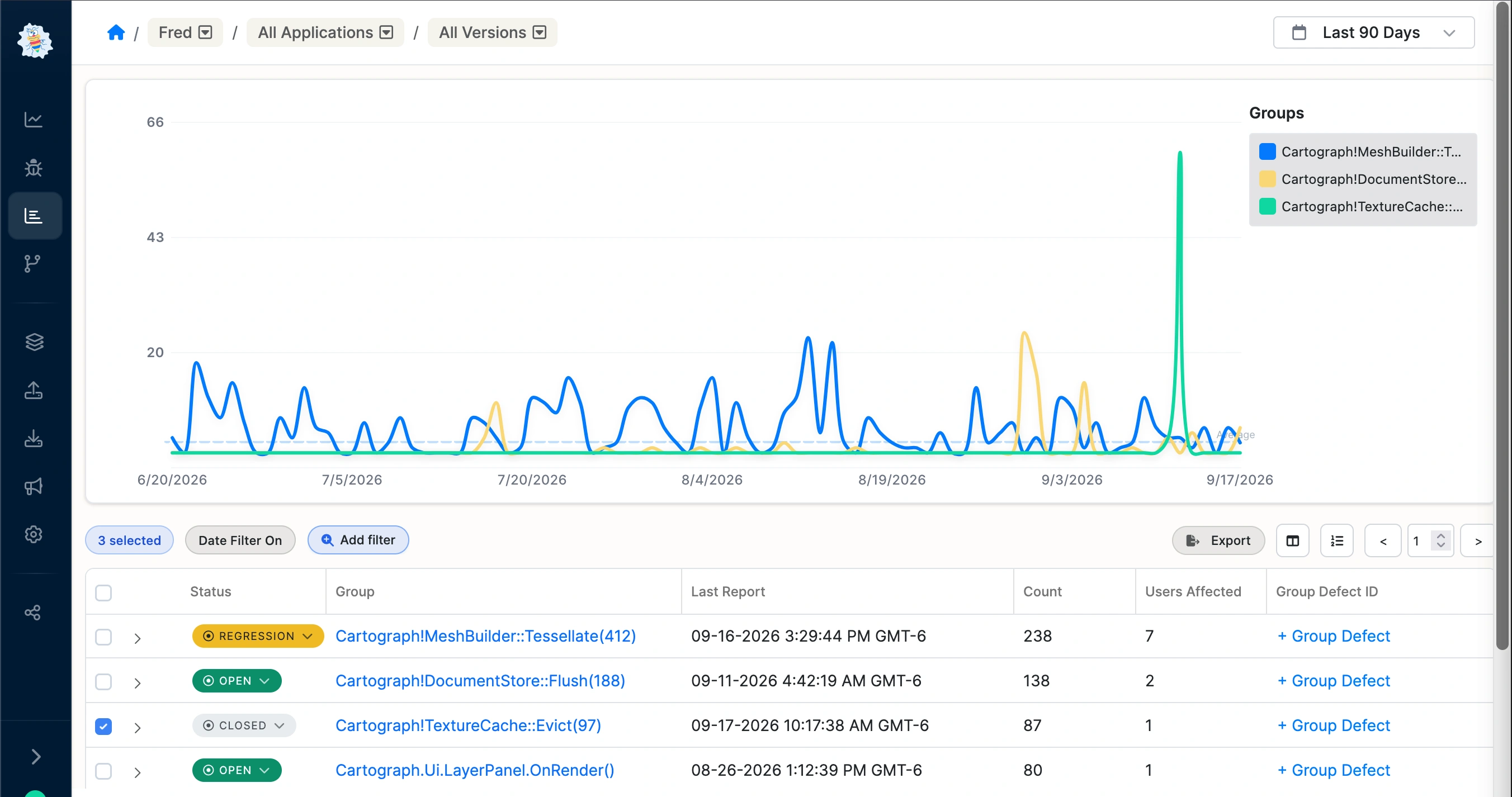
BugSplat groups them your way: your rules decide which call stacks count as the same bug, and OS and runtime frames are skipped by default. The list is ranked by how many users each bug hit, so you fix the biggest one first.
One login, fully symbolicated. Crashes from Windows, macOS, Linux, and mobile land in one list, whether they come from C++, Electron, .NET, or Qt, instead of in a separate tool for each platform.
Whether you're one developer or a company with a dozen product lines, it's the same hosted service, running since 2005. You raise crash volume, storage, retention, and seats as you grow, with no migration. SOC 2 Type II and GDPR are already in place for your security review.
 Windows
 macOS
 Linux
 Electron
 .NET
 Qt
Grouping rules
Decide which call stacks count as the same bug, including when the top frame is a system library instead of your code.
Symbol management
PDBs, dSYMs, symbol servers, and uploads from your build for the exact version that shipped.
Custom alerts
Slack, Discord, Teams, or a webhook when a group spikes.
Version comparison
Crash rates side by side, so you know whether the patch worked.
Regression alerts
Catch the crash that comes back after you thought it was fixed.
File defects with context
Jira, GitHub, or Azure DevOps with the stack still attached.
The outcome
What changes once it’s in the build
A crash from a customer's machine arrives with the thread, the frame, and the line, so nobody asks them to reproduce it. Thousands of reports sort into the handful of bugs behind them, biggest first. Windows, macOS, Linux, and mobile report into the same list. And whoever owns crashes stops spending their week on archaeology.
Fewer “it crashed” tickets to chase. More time on the next release.
Platforms & runtimes
Native symbolication on Windows, macOS, and Linux.
C++, .NET, Electron, and Qt, with PDBs and dSYMs matched to the build that shipped.
Wire up the SDK, upload symbols with the build, and see a symbolicated stack the same day.
View all SDKs
Windows C++
Symbolicated call stacks from Windows minidumps, with PDBs and Crashpad supported.
View docs
Electron
Main process and renderer crashes in the same dashboard as your native modules. Setup takes minutes.
View docs
.NET
.NET Framework 4.7.2+ and .NET 10+

macOS
dSYMs and native stacks

Linux
Desktop and server builds
Rust and Tauri
Native crashes and Rust panics

Qt
Cross-platform C++ apps

Crashpad
Google Crashpad integration
Have an unusual build or symbol setup? Contact support and you'll reach the engineers who build BugSplat.
Customers
What desktop teams say about working with us.
What it's like once you're a customer.

“BugSplat isn't just a service provider, they're a true partner in our success. Their dedication to solving problems goes beyond what I've experienced with any other vendor.”


“Using BugSplat feels like a natural extension of our team. Its intuitive design and straightforward tools help the entire team tackle problems without wading through endless docs.”

“The quality and responsiveness of BugSplat's customer support stands head and shoulders above any service we've used.”
Learn more
A few resources to get you started.
Picked by the team: the docs, posts, and stories worth your time before you decide.
Get started
Point it at something you already shipped.
Free until you need a paid feature. Wire up one platform and see what your users have been hitting.