





Electron crash reporting

Your Electron app broke on someone else's machine. Minidump or JavaScript error, you get the stack.

BugSplat captures native crashes through Electron's built-in crashReporter and JavaScript errors from the main and renderer processes, then resolves both against your symbols and source maps so each reads as a file and a line.

Why BugSplat for Electron

Both halves of an Electron app, the native process and the JavaScript on top, report into one dashboard with readable stacks, one grouping, and one set of alerts.

01 · It lands

Something breaks in your Electron build. You find out first.

Point Electron's built-in crashReporter at BugSplat and native crashes arrive as minidumps with their annotations. Add a few lines to the main and renderer processes and uncaught exceptions and unhandled rejections report the moment they fire, with the chain of causes intact when one error wraps another. If the app is a launcher or a mod tool, it reports into the same dashboard as the game.

  • Native crashes through Electron's own crashReporter, no extra client to ship
  • JavaScript errors from main and renderer, with the full chain of causes
  • Electron framework symbols resolved automatically; upload your own for native add-ons
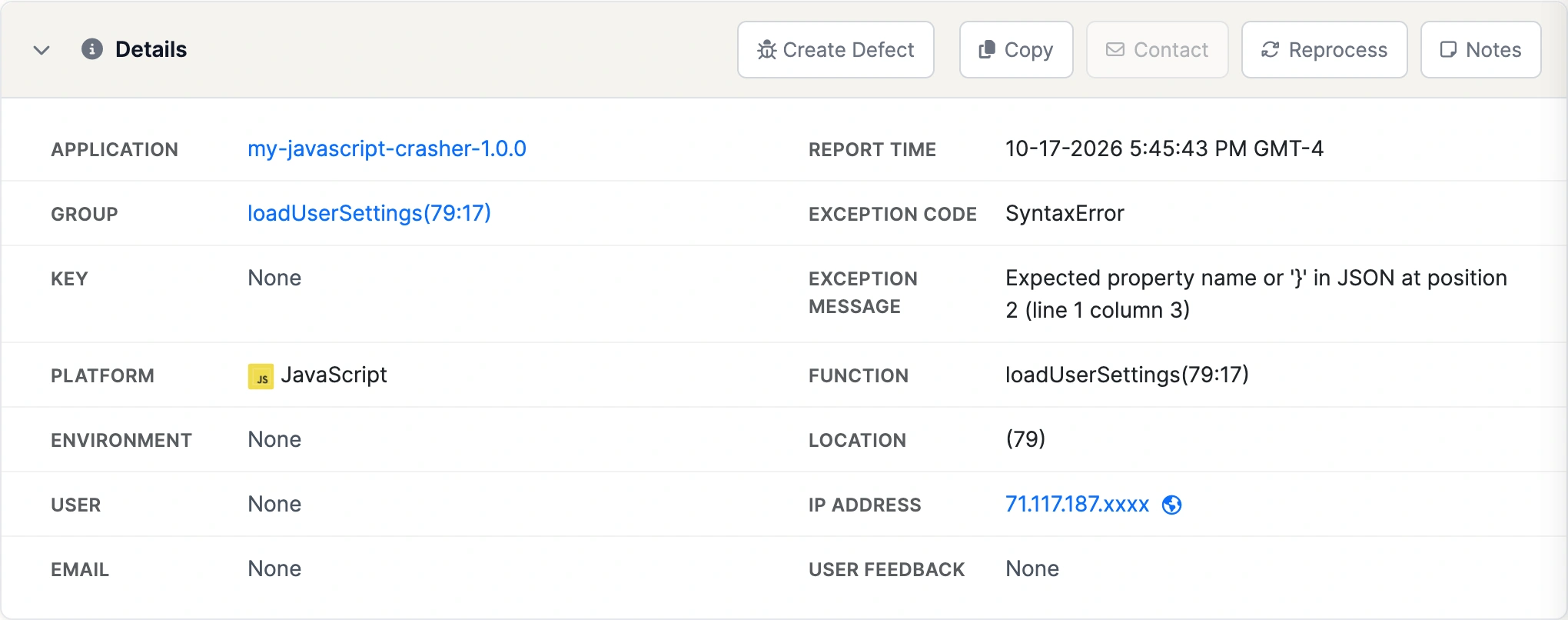
A crash report in BugSplat with application, group, exception, platform, and the user's feedback - how Electron crashes and errors arrive

02 · It groups and resolves

A report count is not a bug count.

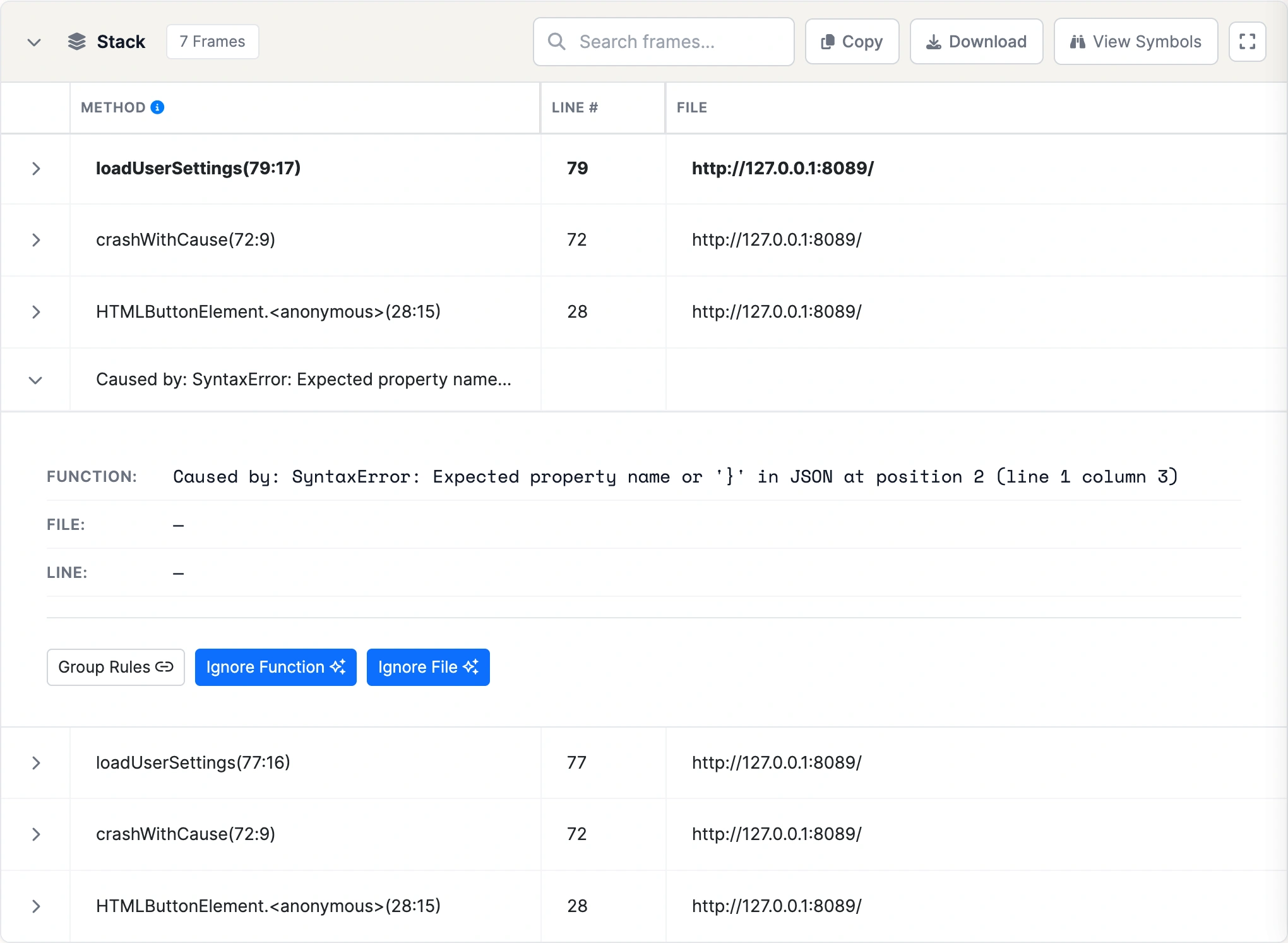
BugSplat groups Electron crashes and errors your way: your rules decide which call stacks count as the same bug, and the list is ranked by how many people each one hit. Minidumps resolve against the symbols from your build and JavaScript stacks resolve against the source maps you upload, so minified bundles read as your own files and lines.

  • Thousands of reports collapse into a short list of distinct bugs
  • Your own file and line from the source map, not an offset into a minified bundle
  • OS, hardware, and build on every report
A symbolicated active thread in BugSplat with the faulting frame expanded to its file, line, arguments, and locals

03 · It tells you

Stay ahead of the next one.

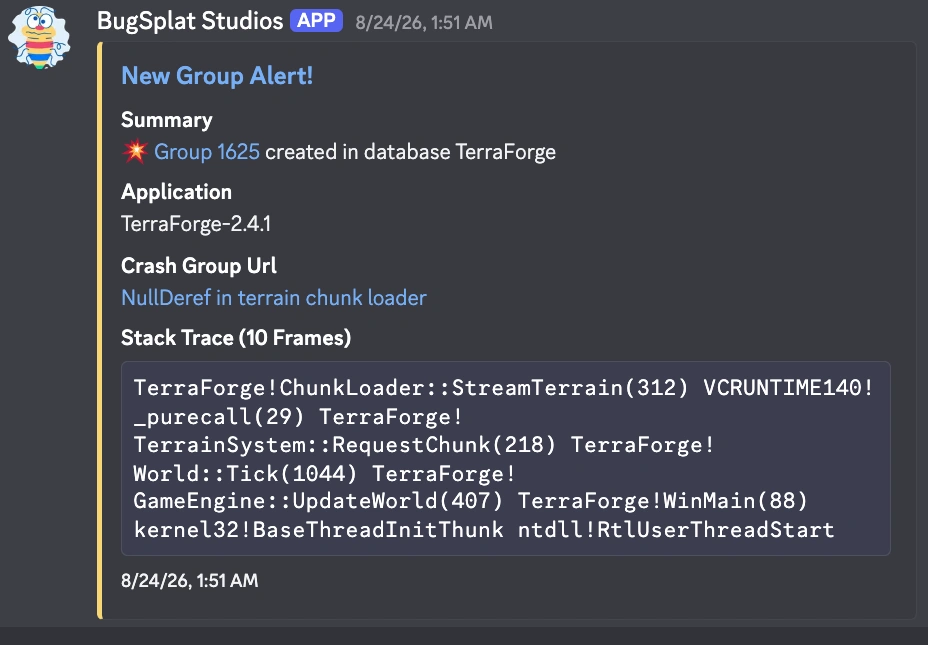
Alerting for Electron crashes and errors hits Slack, Discord, or Teams the moment something spikes. Version-over-version analytics show whether each release is more stable than the last.

  • Regressions flagged when a fixed crash comes back
  • Daily and weekly digests with the highlights
A BugSplat new group alert in Discord with the crash group and stack trace

What makes BugSplat different

Crash reporting that covers the native half of Electron.

Most tools treat an Electron app as a web page. The native process is where the hard crashes happen, and native crashes are what we have done since 2005.

Native from the start

BugSplat has been turning minidumps into readable stacks since 2005. Symbols, PDBs, and native crashes are the core of the product.

A bill that holds still

Flat monthly plans with fixed limits. A spike in crash volume after a release doesn't change your bill.

Answered by the people who build it

Email support with a Electron question and you'll hear back from an engineer who builds BugSplat, usually the same day.

Electron setup

Wire up Electron and read a real stack the same day.

Add the SDK and upload symbols and source maps with each build. If you get stuck, contact support and you'll reach the engineers who build BugSplat.

By clicking "Accept", you agree to the storing of cookies on your device. View our Privacy Policy .